
Creating a Positive, Supportive Environment at Kingsford Smith School
At Kingsford Smith Primary School, our approach to behaviour aligns with the Education Directorate’s implementation of the Positive Behaviour for Learning (PBL) framework, as well as our valued partnership with Real Schools. Together, these frameworks guide our commitment to building a safe, caring, and respectful learning environment for every student.
Its key features include:
- Agreeing on expected behaviours
- Teaching and practising expected behaviours
- Give feedback on expected behaviours
- Responding to problem behaviour
- A restorative approach to repairing relationships
We approach every behaviour choice as a chance to teach, support, and guide our students. Our approach is proactive and restorative — we focus on helping students reflect, repair relationships, and return to learning with a fresh start.
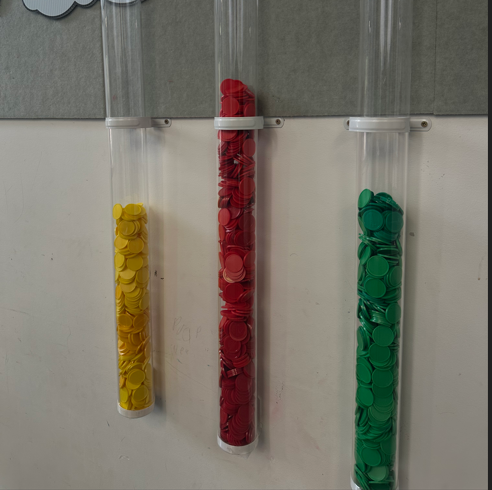
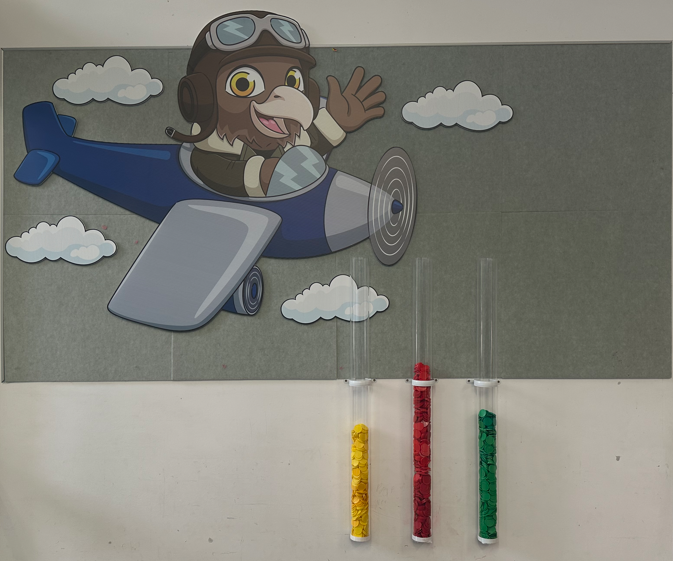
Just as importantly, we celebrate positive behaviour as a school community. Through our whole-school acknowledgement system, students are recognised for making positive choices that align with our expectations. Tokens earned in classrooms contribute to our collective school goal and events that celebrate our success. This is about working together as a community, recognising that every positive choice strengthens our school environment.
Celebrating Positive Behaviour: Our Acknowledgement System
At Kingsford Smith School, we believe that recognising and celebrating positive choices is just as important as addressing challenges. Our positive acknowledgement system is designed to reinforce our school values and expectations in a way that is collective, encouraging, and community-focused.
Whenever students demonstrate behaviours that align with our school expectations — like being respectful, responsible, and engaged learners — they receive positive acknowledgement from their teachers and staff. This could be praise, encouragement, and recognition that helps reinforce the value of their choices.
Sometimes, alongside this positive feedback, students may also receive a coloured token. These tokens are a visible and tangible way of celebrating positive behaviour and contribute to our collective school goals.
- Yellow tokens acknowledge students demonstrating safe behaviour.
- Red tokens recognise respectful behaviour.
- Green tokens celebrate students as engaged learners.
How It Works
- Step 1: Recognising Positive Behaviour: Students are acknowledged by staff when they demonstrate behaviours that reflect our shared expectations.
- Step 2: Earning Tokens: At times, students will receive a coloured token to go with their positive acknowledgement.
These tokens are visible in all classrooms, building excitement and a sense of teamwork. - Step 3: Building Together as a Community: Class token collections are added to our whole-school tubes, where we track our progress over time. Every token counts towards our shared goal!
- Step 4: Celebrating as a School: As our community reaches milestones (eg. 2000, 4000 tokens), we work towards a special end-of-semester celebration event. The more tokens we collect, the bigger and better our celebration becomes — because every student’s positive choices make a difference.
Our Approach to Behaviour Support: The On Track System
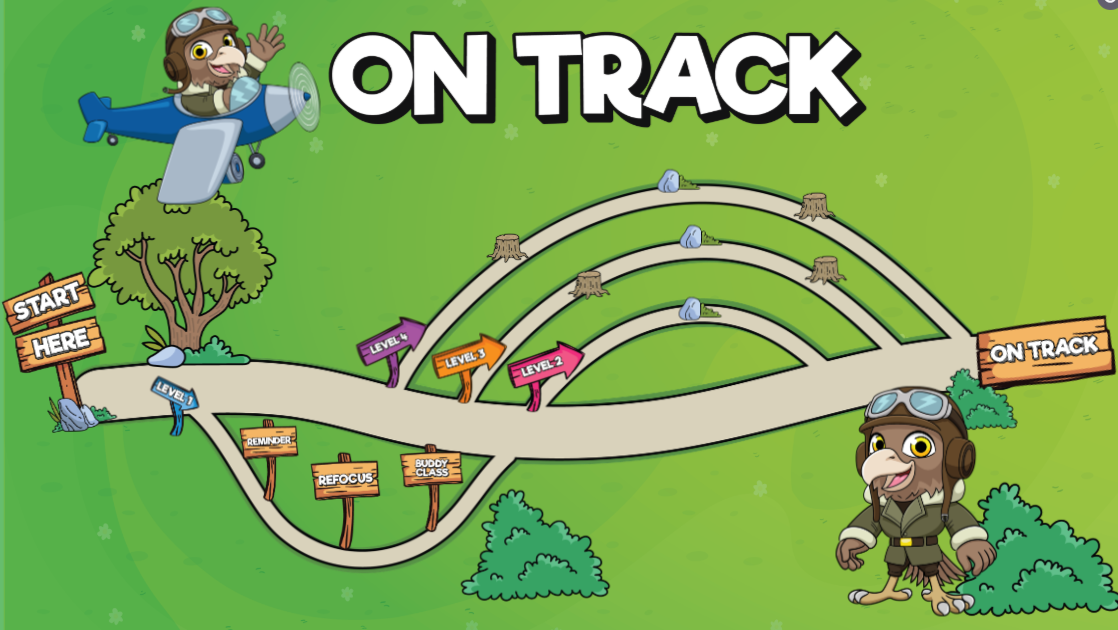
The On Track System at Kingsford Smith School is designed to promote reflection, self-regulation, and personal growth. Through calm, consistent responses, we help students understand expectations, take responsibility, and make positive choices.
Step 1: Low-Key Response
- Subtle, respectful redirection strategies
- Teacher use proximity support, use non-verbal cues, or quietly prompt
- Positive behaviours of others are praised to guide student choices
- If behaviour continues, we move to Step 2.
Step 2: Expectation Reminder
- Clear, calm, and specific verbal reminder of expected behaviour
- Example: “Name, we use respectful voices when speaking to others. That is your reminder.”
- If behaviour continues, we move to Step 3.
Step 3: Classroom Refocus
- Student is directed to a refocus space within the classroom (3-5 minutes)
- Opportunity to pause, reset, and reflect
- A short reflection task may be given to support thinking about next steps
- If behaviour continues, we move to Step 4.
Step 4: Buddy Class Refocus
- Student moves to a nearby Buddy Class for further reflection (3-5 minutes)
- Buddy class is a class of a separate year level nearby
- Example: “Name, we use respectful voices when speaking to others. I need you to take some time to refocus in Buddy Class.”
- If behaviour continues, we move to Step 5.
Step 5: Office Refocus (within Building 1 or 2)
- Student is referred to the office to meet with a member of the leadership team.
- The leadership team assesses the situation, and makes the decision on the student returning to class or remaining with an executive for a period of time.
- The student is then referred to the teacher for a restorative session to reflect, repair and develop a plan moving forward.
Understanding Behaviour Levels at Kingsford Smith School
At Kingsford Smith School, we believe every behaviour is an opportunity to guide students towards reflection, growth, and positive choices. To support this, we use a clear and consistent system called Behaviour Levels.
This system helps students understand their choices and see behaviour as something they can learn from, rather than just something that is "managed." It ensures responses to behaviour are, predictable, and focused on helping students get back on track.
What Are Behaviour Levels?
The Behaviour Levels describe different types of behaviour and how we respond to them. They help students recognise:
- The impact of their actions
- The support they need to make positive choices
- Maintain that our focus is always on learning and relationships
Teachers and staff use these levels to guide responses in a consistent way, aiming to resolve issues early and keep students engaged in learning.
Our Behaviour Levels
Blue Level – These are low-level behaviours where a student is not yet showing our expected classroom habits. Examples include calling out, being off-task, not following instructions, or minor disruptions. Teachers use, low-key strategies and reminders to guide the student back on track. If needed, we use our On Track process to provide further support.
Pink Level – These behaviours require a higher level response and potential brief removal from class. Examples include using an aggressive or rude tone, refusing to follow the On Track System, using inappropriate language or gestures, or absconding for a short time. Students at this level engage in a restorative session.
Orange Level – This level includes more serious behaviours that can impact the safety or wellbeing of others. Examples include abusive language directed at others, physical aggression, intentional property damage, making threats, or repeated lower-level behaviours. Students are referred immediately to the office in Building 1 and 2. Staff support a restorative approach and put plans in place to ensure a safe and respectful return to learning.
Purple Level – Purple level behaviours involve serious risks to safety and wellbeing. Examples include racism, discrimination, theft, serious physical aggression, repeated serious behaviours, or threats or aggression directed at staff members. The office and leadership team intervene straight away. Support plans and formal consequences are put in place to help the student reflect, repair, and move forward safely.
What Are “Slips”?
Students may sometimes refer to "slips" when talking about their behaviour choices at school. This is because as part of our system, we use colour-coded behaviour slips to:
- Keep a simple and clear record of what’s happened when taking student/staff statements
- Support teachers in tracking behaviours as part of our administrative process
- Help with restorative conversations, where students reflect and plan for positive steps forward
The slip itself is not a punishment. It is simply a tool to help students and staff remember the conversation and the choices made, supporting a smooth and respectful approach to behaviour.
Restorative Sessions: Learning and Repairing Relationships
At Kingsford Smith School, we value the importance of giving time and space for meaningful conversations about behaviour. To support this, we’ve extended our break times to make room for these important restorative processes.
This means that, while all students continue to enjoy the same overall break times they’re used to, we’ve introduced ‘Bonus Play’. Students who do not require support from their teacher during this time engage in Bonus Play, while those who are taking part in a Restorative Session are given the focused attention they need to reflect and reset prior to break time. If an incident happens after break one, we will generally run the restorative session the following day.
This approach ensures that students who need extra guidance receive it — without detracting from classroom learning time or peer play opportunities. It keeps our system predictable and supportive for all. Rather than focusing on consequences, our Restorative Sessions guide students to reflect, repair, and restore relationships
When: First 20 minutes of Break 1 (during Bonus Play)
Led by: Classroom teacher, year level teacher, or executive team member
Conversation Focus:
- What happened? Student shares their perspective
- Who was affected? Understanding the impact on others
- What were you thinking? Reflecting on their mindset at the time
- What needs to happen next? Making things right and planning for success
Possible Outcomes:
- Verbal or written apology (if needed)
- Positive actions to restore relationships
- Personal plan to meet expectations
- Additional support (social-emotional learning, check-ins)
Flexible Support for Diverse Needs
At Kingsford Smith School, we know that some students need different support to succeed. While we follow a consistent, school-wide behaviour approach, we are always open to adjusting our support. We work closely with families and external experts to personalise plans where needed.
Every student is unique — and we believe in meeting them where they are, with care, flexibility, and high expectations.